

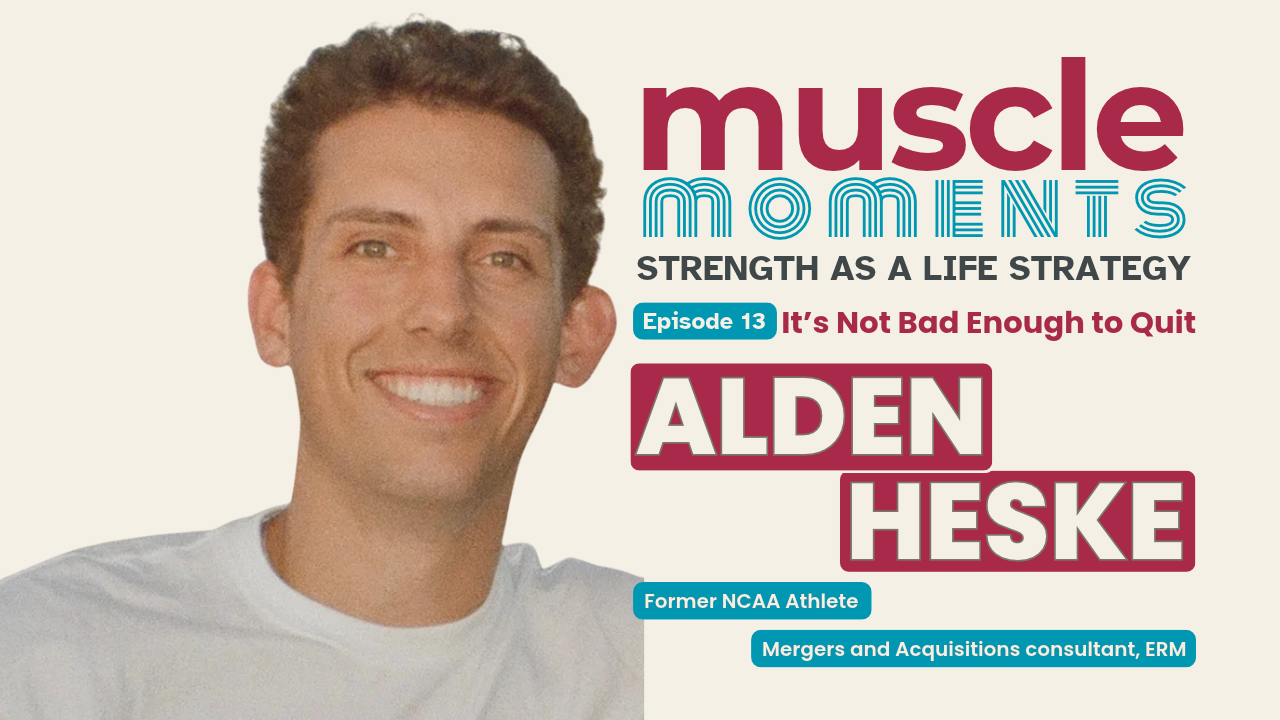
When Alden’s alarm went off at 4:30 a.m. in Manhattan, he didn’t just get up and go to the gym. Nope, he rode a train an hour and fifteen minutes to a parking spot in Connecticut he’d bought because parking in the city is egregiously expensive. Then he drove three and a half hours to Vermont, in a blizzard, to play in the snow. It gets deeper than that, and I’m not talking about the snow.
He skied all morning. The wind chill was somewhere between minus 15 and minus 20 degrees. When he was done, he drove back to Connecticut, parked his car, got back on the train, and went home to Manhattan.
“To most, that sounds like an awful day,” he said. But for Alden, it was one of the best days he’s ever had.
What stands out about his best day? Nobody made him do it. He did it on his own, using skills he learned as a collegiate athlete.
Alden is 23, a former NCAA Division III lacrosse defenseman at Kenyon College, a sport he’d been playing since elementary school. In May 2025, he graduated and his relationship with sport changed fast. Suddenly, but not all of the sudden, the structure he knew disappeared.
When the structure we’re used to goes, we find out what we want by what we choose to do.
On this episode we get into
The wall every athlete sees coming
Co-workers who made skipping the gym unacceptable
Why the outdoors gives him the same focus as game time
The importance of joy, especially when something sucks
Mental health in sports
You Can See The Wall Coming
Every athlete knows the end is coming. “You see this wall approaching,” Alden said, “You just don’t know if you’ll hit it today, tomorrow or in a week.”
When Alden’s wall came, he felt relief. Like he knew it was time for a break. Years of injuries and burnout will do that to a person. The yearning for discipline and sport did come back a few months later along with the realization that he’d never play again. (It often takes time to realize something is gone and to allow yourself the space to grieve.)
He’d watched his friends go through an identity crisis over “what life means outside of sport” and now it was his turn. So Alden made a promise to himself. He wasn’t going to fall into a period where he was going to have to dig himself out of a hole. And he was “unwilling to give up any strength” he’d built as a collegiate athlete.
The strategy was simple: “At first, when I got back to it, I pretended like it wasn’t over.” He trained like an athlete, as if he was going back for another season even though he was moving to New York and starting his first job out of college.
I love this, because it’s a bridge to his next chapter in life. He kept the habits he knew and loved while he figured out this new post-college experience. It kept him grounded. Lucky for him, he also had backup. Two guys from work met him at the office gym every morning before work. If he slept in, he heard about it: “Yo, bro. Where were you?” they’d tease.
Structure doesn’t have to come from a coach. Sometimes it’s two friends willing to give you shit when you stray on your integrity.
Most often, structure is something you give yourself.
Strong By Choice
As fall approached, Alden realized he had a problem: he hates running. In New York, there’s pilates, yoga, gyms, and running down Madison while you weave through taxis. Manhattan isn’t known for the outdoorsy adventures he loved and wanted more of in his life now that he wasn’t a collegiate athlete.
So he went and got what he loved, no excuses.
Setting this up was an adventure all its own. It meant taking the train on the weekends to a rented parking spot where he kept his car outside the city. Then driving hours so he could go skiing or mountain biking to get his dose of the outdoors. His friends were skeptical. “It felt very much like I was going against the grain,” he said. Some weekends his roommates came. Some weekends nobody did, and he went anyway.
Listening to him talk about his relentless pursuit of the outdoors struck a cord with me. He made the choice to do what he wanted to do, no matter what. The same goes for strength, it’s a choice to become strong, and it’s not an easy one. Because most people don’t understand it.
I know this personally. My sport didn’t end because I ran out of seasons. It ended because my health fell apart. I went from being one of the strongest women in the world to needing help getting out of bed.
What got me through was refusing to let constant health issues get the best of me. Instead of resigning to health issues, I chose to lean on the foundation I built. Twenty years of choosing strength had given me the proof I needed to believe I could keep going, even when everything around me said otherwise.
Choosing what makes you happy, in my case choosing strength, is the key. The choice isn’t just about today. It’s about building evidence for the day the structure you know collapses whether it’s your sport, your job, your body, or an empty house. The strength you choose now is what you’ll stand on later, promise.
Alden says it best: “You may not love what it takes to get strong, but it’s having the strength to lean on that is so important.” I agree.
Not Bad Enough To Quit
Alden’s sophomore year as an athlete at Kenyon was brutal. The coaches made it hard on purpose because they were setting the tone for the season. “We had people throwing up at practice,” he said. (Gross! But it happens at the elite level.)
Every night he and his roommate, his best friend on the team, sat in their dorm and complained about it. “This is the first time I’ve not loved what I’m doing,” Alden told his friend. They were thinking about quitting.
Instead of quitting, they made a deal with each other. “We’re gonna kick the quit-can down the road. We’ll wait a week, and if we still want to quit, then we’ll quit.” They never quit. One week became two, two became three, and then it was four years later. That sophomore team was the most closely bonded team Alden ever played on, and the team’s record still stands as the best in program history. (Doing hard shit together works!)
What he took from that season had little to do with lacrosse. Because what he taught himself by kicking the quit-can down the road was a new way to approach anything he may want to quit. Now, when he wakes up and doesn’t want to go to the gym, he asks “do I feel bad enough to quit?”
“It may suck and I may be the least happy I’ve ever been, but it’s usually not bad enough for me to quit.”
I’m stealing this. “I don’t feel like it” is a feeling. “Bad enough to quit” is a threshold, and it’s a lot higher than we realize.
Most of the time, we’re nowhere near the quitting threshold we just don’t give ourselves the chance to realize it. So next time you’re ready to quit, rather than bailing, take a beat and ask yourself “is this bad enough for me to quit?”
I bet you it’s not.
One More Rule
Alden’s workout playlist runs 40 or 50 songs deep, but only one song on the list has a job. “I have a rule that if Everlong by Foo Fighters ever comes on while I’m on a break, my break’s immediately over. No matter what.”
The song comes on more than he’d like, usually right when he’s finally ready for rest. “I’m convinced that the universe is trying to make my work out harder,” he said.
I’m convinced Spotify is plotting. I’m also not sure if Foo Fighters would love or hate this strategy. Either way, Everlong is going on the Muscle Moments playlist.
Your Turn
Here’s your assignment from this episode: the next time your brain is telling you not to do the “thing” you’re supposed to do, don’t ask yourself whether you feel like it, ask Alden’s question instead:
Do I feel bad enough to quit?
If the answer is no, and it almost always is, get up and go do the hard thing. Prove to yourself how capable you are. Then come here to tell me about it.
About Alden Heske:
Alden Heske is a recent college graduate and former NCAA lacrosse player. Now living in Denver, he is an avid skier, mountain biker, and hiker. He is constantly looking for ways to stay active and be outside, pushing himself to do the hard thing no matter what his mind is telling him. Alden is an active advocate for mental health in athletics.
If you or someone you know is struggling, in anyway, call or text 988 to reach the Suicide & Crisis Lifeline (US).
Get In Touch With Dana
yo@wildefitcoaching.com


